Recent Posts
Weekly Prompts
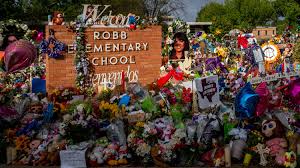
The Robb Elementary School shooting in Uvalde reignited national debates about gun violence and gun control in the United States. The documentary After Uvalde: Guns, Grief & Texas Politics examines the tragic loss of 19 children and two teachers and the long-lasting impact on the community. It also highlights the broader political and social debates about how to address gun violence. This case reflects larger national patterns of firearm violence and demonstrates how mass shootings often intensify political disagreements about gun control policy.
Gun violence has been an enduring problem in the United States for decades. According to Alvarez and Bachman (2023), firearms play a significant role in violent crime and homicide in the United States, and the country has significantly higher gun death rates than many other developed nations. Although mass shootings represent only a portion of overall gun violence, they attract significant attention because of the large number of victims and the shock they create in communities. The Uvalde shooting reflects a pattern seen in several other mass shootings where a young perpetrator legally purchased firearms shortly before committing the attack. This situation raises questions about firearm accessibility and whether current regulations are sufficient to prevent dangerous individuals from obtaining weapons.
The tragedy in Uvalde intensified public debate between two major perspectives on gun control. One perspective supports stronger firearm regulations to reduce gun violence. Supporters of stricter gun control argue that policies such as universal background checks, raising the minimum age to purchase certain firearms, waiting periods, and restrictions on assault-style weapons could reduce the likelihood of mass shootings. Advocates of this perspective believe that the ease with which the Uvalde shooter obtained firearms demonstrates weaknesses in current laws. They argue that implementing stronger regulations could make it more difficult for individuals with violent intentions to access weapons. From this viewpoint, stronger gun control policies could help prevent future tragedies.
The opposing perspective emphasizes individual gun rights and the constitutional protections of the Second Amendment to the United States Constitution. Supporters of this viewpoint argue that responsible gun owners should not lose their rights because of the actions of criminals. Instead of increasing gun control regulations, they often propose solutions such as improving mental health services, strengthening school security, and addressing failures in law enforcement response. In the Uvalde case, criticism was directed at the delayed police response during the shooting. Some critics argued that quicker intervention may have reduced the number of casualties. From this perspective, enforcement failures and security weaknesses are seen as more significant issues than firearm regulations.
Evaluating these perspectives shows that both sides raise important concerns about preventing gun violence. Research in criminology suggests that violence is influenced by multiple factors, including access to weapons, social environments, mental health issues, and law enforcement responses (Alvarez & Bachman, 2023). While stricter gun regulations may limit access to firearms for some individuals, improvements in mental health resources and emergency response systems may also play a role in prevention. Because gun violence is a complex issue, many researchers argue that a combination of policy solutions may be necessary.
Overall, the Uvalde tragedy demonstrates how deeply divided the United States remains on the issue of gun control. The documentary shows the devastating impact that gun violence can have on families and communities while also highlighting the political disagreements that make policy change difficult. Understanding both sides of the debate is important when considering solutions to reduce gun violence and protect public safety.
References (APA)
Alvarez, A., & Bachman, R. D. (2023). Violence: The enduring problem (5th ed.). SAGE Publications.
After Uvalde: Guns, Grief & Texas Politics. (2023). PBS FRONTLINE.
CRP #5
The way crowd events are described in the media—whether as a ‘riot,’ ‘protest,’ ‘mob,’ or ‘uprising’—plays a powerful role in shaping public perception and influencing criminal justice responses. A clear example of this can be seen in the coverage of the 2020 protests following the death of George Floyd. Different media outlets framed the same events in contrasting ways, which demonstrates how language and framing can influence how society interprets crowd behavior and determines appropriate responses.For instance, some outlets such as CNN and The New York Times frequently referred to the events as “protests” or “demonstrations,” emphasizing themes of racial justice and police accountability. In contrast, other outlets such as Fox News often used terms like “riots,” “looting,” and “violence,” highlighting disorder and criminal activity. These differences illustrate framing theory, which suggests that the way information is presented influences how audiences understand and interpret events. According to Alvarez and Bachman (2023), crowd behavior is often socially constructed, and media framing can either legitimize or delegitimize collective action depending on how participants are portrayed.
Labeling theory also helps explain these differences. Labeling theory argues that individuals or groups are defined by the labels assigned to them, which then influence both public perception and official responses. When participants are labeled as “protesters,” their actions are more likely to be viewed as constitutionally protected expressions of free speech. However, when they are labeled as “rioters” or a “mob,” their behavior is more likely to be criminalized, justifying harsher law enforcement responses (Alvarez & Bachman, 2023). This distinction is critical because it can affect whether individuals are seen as activists or criminals.
These competing narratives have real consequences for the criminal justice system. In areas where events were framed primarily as riots, there were often increased police presence, the use of force, mass arrests, and more aggressive prosecution strategies. In contrast, areas where the events were framed as protests were more likely to see efforts toward de-escalation, dialogue, or policy reform. For example, some jurisdictions implemented curfews and deployed the National Guard, reflecting a perception of widespread disorder. Meanwhile, the broader framing of the protests as part of a movement for racial justice contributed to policy discussions around police reform, including changes to use-of-force policies and increased accountability measures.
In conclusion, the case of the 2020 George Floyd protests demonstrates that media framing and labeling significantly influence how crowd events are understood and managed. By applying framing theory and labeling theory, it becomes clear that language is not neutral—it shapes public opinion and directly impacts criminal justice responses. Understanding this dynamic is essential for critically evaluating media narratives and recognizing how power and perspective influence definitions of violence.
References
Alvarez, A., & Bachman, R. D. (2023). Violence: The enduring problem (5th ed.). SAGE Publications.
Pew Research Center. (2020). U.S. media polarization and the 2020 protests. https://www.pewresearch.org
 sajordanscrimereportportfolio